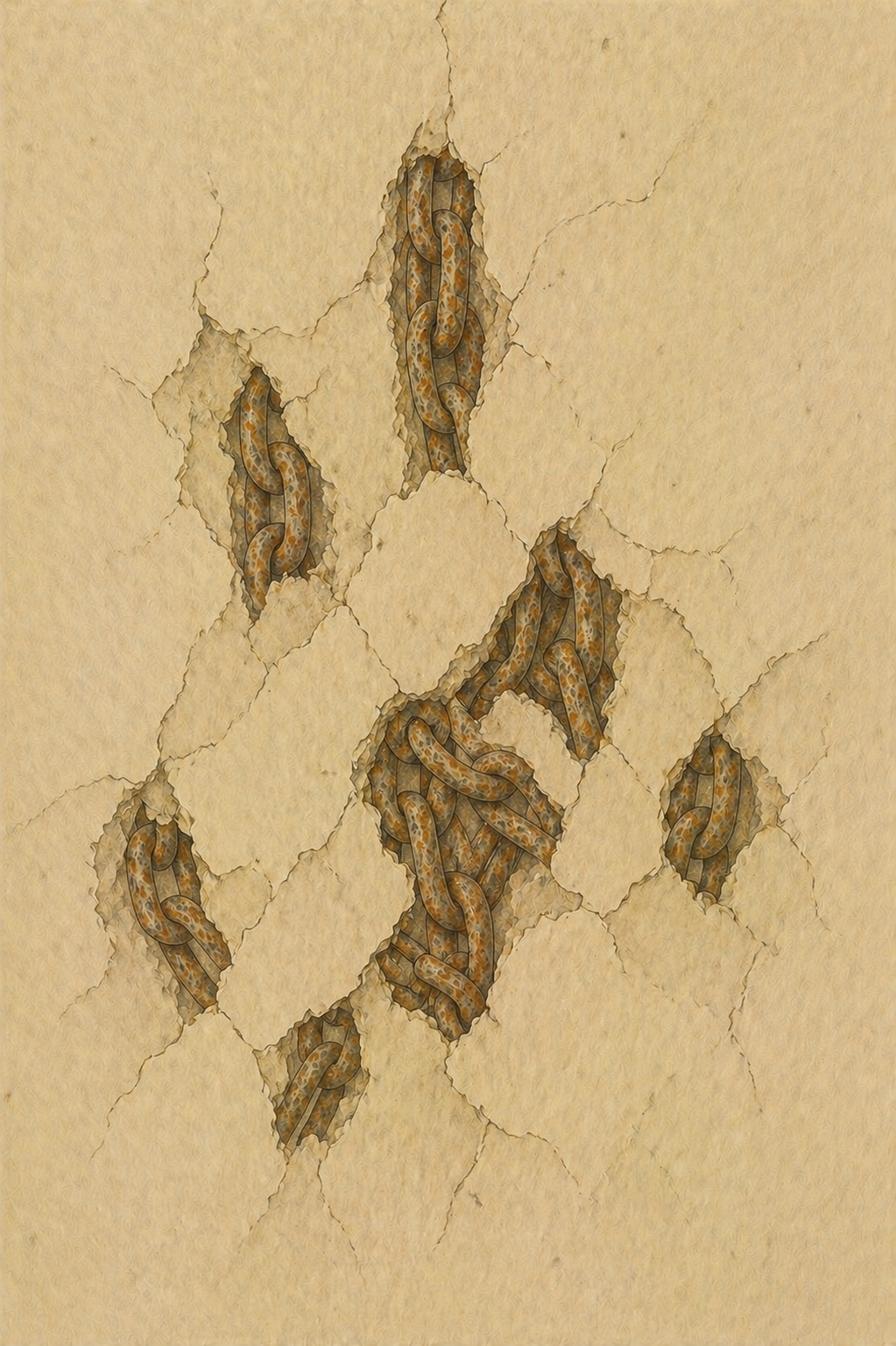


When the mind refuses to slow down
Anxiety often begins as a feeling that something is wrong, even when you cannot clearly explain why.
Your mind starts running ahead of you. Thoughts move quickly from one possibility to another. Small uncertainties suddenly feel larger and more urgent.
Your body reacts too. The chest tightens. Breathing changes. Sleep becomes harder. You may feel restless or constantly alert.
Many people interpret this as a personal failure. They wonder why they cannot simply calm down or think more positively.
But anxiety is not a sign of weakness. It is one of the brain's basic survival systems. It exists to help you detect potential danger and prepare for it.
The problem begins when this system becomes overactive. Instead of turning on only when needed, it begins reacting to everyday uncertainty.
Understanding what anxiety is and why it happens can make the experience feel less mysterious and more manageable.
What it feels like
Anxiety affects thoughts, emotions, and the body. People experience it in different ways, but many patterns are common.
You might notice:
• constant worrying that is hard to switch off
• feeling restless or unable to relax
• tightness in the chest, stomach, or shoulders
• racing thoughts or difficulty concentrating
• trouble falling asleep or staying asleep
• imagining worst case scenarios repeatedly
• replaying conversations or decisions in your mind
• feeling on edge even when nothing obvious is wrong
Some people experience anxiety mainly as worry. Others notice it more in their body as tension, fatigue, or irritability.
The intensity also changes. Anxiety can appear in brief bursts or remain present throughout the day.
When these experiences begin interfering with daily life, anxiety may be becoming a more persistent problem.
What anxiety actually is
Anxiety is the body's response to perceived threat or uncertainty.
When the brain detects something that might be dangerous, it prepares the body to act quickly. Heart rate increases. Breathing becomes faster. Attention narrows.
These changes are part of the stress response. They help people respond quickly when a situation requires action.
In short bursts, anxiety can be useful. It can sharpen focus before an exam, increase alertness in unfamiliar situations, and motivate preparation for important events.
Problems arise when the alarm system activates too easily or remains active for too long.
Instead of responding only to real threats, the system begins reacting to possibilities. The mind starts scanning for what might go wrong.
Over time this pattern can create constant mental tension.
Anxiety disorders develop when these responses become frequent, intense, and disruptive to daily life. According to the World Health Organization, anxiety disorders are among the most common mental health conditions worldwide.
The important point is that anxiety itself is not abnormal. It is a normal protective system that sometimes becomes overly sensitive.
Why anxiety happens
Anxiety usually develops through a combination of influences rather than a single cause.
Uncertainty
Uncertainty is one of the strongest triggers for anxiety.
When the brain cannot predict what will happen, it begins scanning for possible problems. The mind tries to reduce uncertainty by thinking about it repeatedly.
Unfortunately this often has the opposite effect. The more attention the mind gives to potential threats, the more real they begin to feel.
Stress and pressure
Long periods of stress make the anxiety system more sensitive.
Heavy workloads, financial pressure, relationship problems, illness, or major life changes can place continuous demands on the mind and body.
When recovery time is limited, the stress response becomes easier to trigger.
Sleep problems can intensify this effect. Poor sleep reduces emotional resilience and makes worry harder to regulate.
Past experiences
Anxiety can also develop through learning.
If a situation was frightening or overwhelming in the past, the brain may begin treating similar situations as potential threats in the future.
For example, someone who experienced a panic attack in a crowded space may later feel anxious in many public environments.
Individual vulnerability
People vary in how sensitive their stress systems are.
Genetics, temperament, and early life experiences can influence how strongly someone reacts to uncertainty or threat.
These factors increase vulnerability but they do not determine outcomes. Environment, coping skills, and support systems also shape how anxiety develops.
The anxiety cycle
Anxiety often maintains itself through a repeating pattern.
Understanding this cycle can help explain why anxiety sometimes feels difficult to escape.
A simplified version of the cycle often looks like this:
- A situation creates uncertainty or possible threat.
- The mind begins scanning for danger.
- Worry increases attention on possible risks.
- The body reacts with tension and faster breathing.
- These physical sensations reinforce the sense that something is wrong.
- The brain interprets this as confirmation that the situation is dangerous.
The cycle then repeats.
Thoughts and physical sensations feed each other. The more attention given to the perceived threat, the stronger the anxiety response becomes.
Many anxiety treatments focus on interrupting this cycle.
What people often misunderstand about anxiety
Several common beliefs about anxiety make it harder to manage.
Anxiety means something is wrong with me
Anxiety is a normal human response. Everyone experiences it.
Feeling anxious does not mean you are weak or incapable. It means your threat detection system is active.
I should be able to control my thoughts
Many people try to eliminate anxious thoughts completely. This often backfires.
Research on thought suppression shows that trying to force thoughts away can make them return more strongly.
Approaches used in therapy often focus on changing how people respond to thoughts rather than trying to eliminate them.
Avoiding anxiety will make it disappear
Avoidance can reduce anxiety in the short term.
But over time it teaches the brain that the avoided situation must truly be dangerous. This strengthens the anxiety response.
Many effective treatments gradually help people face feared situations in manageable steps so the brain can learn that the threat is smaller than expected.
Anxiety should disappear once I calm down
Anxiety involves physical reactions throughout the body. Even after the trigger passes, the body can remain activated for a while.
Understanding this can reduce frustration when anxiety does not disappear immediately.
What helps
Several approaches have strong evidence for helping people manage anxiety.
Learning how anxiety works
Understanding anxiety itself can be helpful. When people recognise that anxiety is a stress response rather than a personal failure, the experience often becomes less frightening.
Education about anxiety is commonly the first step in therapy.
Changing the relationship with anxious thoughts
Psychological therapies often focus on helping people respond differently to worry.
Cognitive behavioural therapy and acceptance based therapies teach ways to notice thoughts without automatically reacting to them.
Research shows these approaches can significantly reduce anxiety symptoms.
Gradual exposure to feared situations
Avoidance keeps the anxiety cycle active.
Gradually approaching feared situations in small steps can help retrain the brain's threat system. Each safe experience teaches the brain that the situation is manageable.
Exposure based approaches are among the most effective treatments for anxiety disorders.
Supporting the body
Anxiety has strong physical components.
Several everyday habits support better regulation of the stress response:
regular physical activity
consistent sleep schedules
limiting excessive caffeine
taking breaks from prolonged stress
Breathing exercises and grounding techniques may also help reduce acute anxiety in the moment. These tools can help manage symptoms but they do not address underlying causes on their own.
Social support
Anxiety often grows stronger in isolation.
Talking with trusted people about what you are experiencing can reduce the sense of threat and help people gain perspective.
Supportive relationships are consistently linked with better mental health outcomes.
When to seek professional help
Many people experience periods of anxiety that improve on their own.
Professional support may help if anxiety:
persists for several months
interferes with work, study, or relationships
causes panic attacks
disrupts sleep or concentration
leads to avoiding everyday situations
Evidence based treatments for anxiety are widely available. These include cognitive behavioural therapy, exposure based therapy, and other structured approaches.
A doctor or mental health professional can help determine what type of support may be appropriate.
If anxiety is accompanied by thoughts of harming yourself or feeling unable to cope, seek help immediately from a doctor, emergency service, or crisis support line in your area.
References
World Health Organization. (2023). Anxiety disorders. https://www.who.int/news-room/fact-sheets/detail/anxiety-disorders
American Psychiatric Association. (2022). Diagnostic and Statistical Manual of Mental Disorders, Fifth Edition, Text Revision.
Craske, M.G., et al. (2017). Anxiety disorders. Nature Reviews Disease Primers, 3.
Hofmann, S.G., et al. (2012). The efficacy of cognitive behavioral therapy. Cognitive Therapy and Research, 36(5), 427–440.
Barlow, D.H. (2002). Anxiety and Its Disorders. Guilford Press.